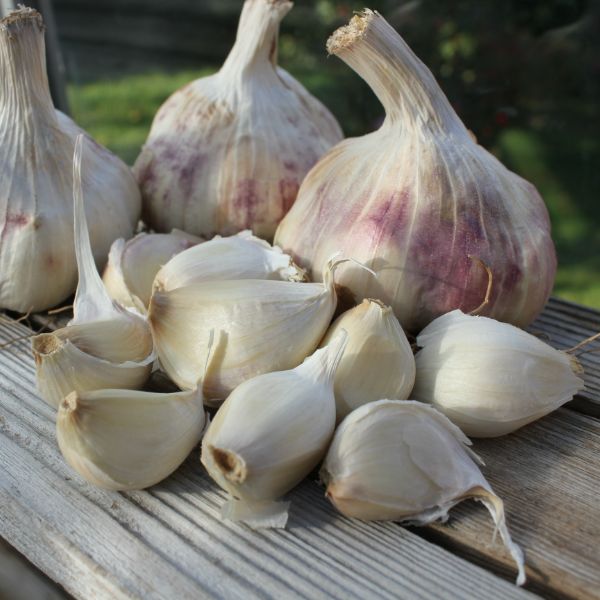
Organic Garlic Kingsland Wight Bulbs (Hardneck) are a Soil Association certified variety grown without synthetic fertilisers or pesticides, offering a natural and reliable way to enjoy high-quality home-grown garlic. Carefully selected and trialled for performance, these bulbs are ideal for passionate growers who value freshness, flavour and the journey from garden to plate.
Kingsland Wight is a highly regarded hardneck garlic originating from France, recognised for its white skin and attractive pink cloves. Producing around 8–14 cloves per bulb, it delivers a rich, full flavour that enhances a wide range of dishes. Best planted in autumn, it is well suited to UK growing conditions and rewards gardeners with a dependable, flavoursome crop.
Grown by trusted expert suppliers and developed through over a century of growing expertise, this organic garlic is carefully produced to ensure consistent quality and strong performance. Suitable for beds or containers, it is an excellent choice for gardeners looking to grow their own ingredients with confidence and enjoy bold, home-grown flavour straight from the garden.
Garlic Types
Hardneck Garlic (Allium sativum var. ophioscorodon)
Generally more hardy than softneck varieties (they are the best choice for northern gardeners) and tend to be a bit larger but with fewer cloves per bulb. They produce 'scrapes' in early summer - a strong, single flower stalk that should be removed and used in all manner of culinary dishes - they taste fantastic!
Softneck Garlic (Allium sativum var. sativum)
Often produce smaller cloves per head but are quicker to mature and will store for longer than hardneck varieties. Softneck types prefer to grow in warmer areas and are generally more mild tasting than hardnecks, soft stems make them perfect for plaiting.
Hardneck types have a distinctive flavour and produce coiled flower stalks known as ‘scapes’ or ‘racamboles’. These are best removed to increase bulb size and are lovely chopped into salad dressings and stir-fries.
Softneck garlics are the ones most commonly grown. They don’t produce a stalk and are known for storing well, traditionally in a plait.