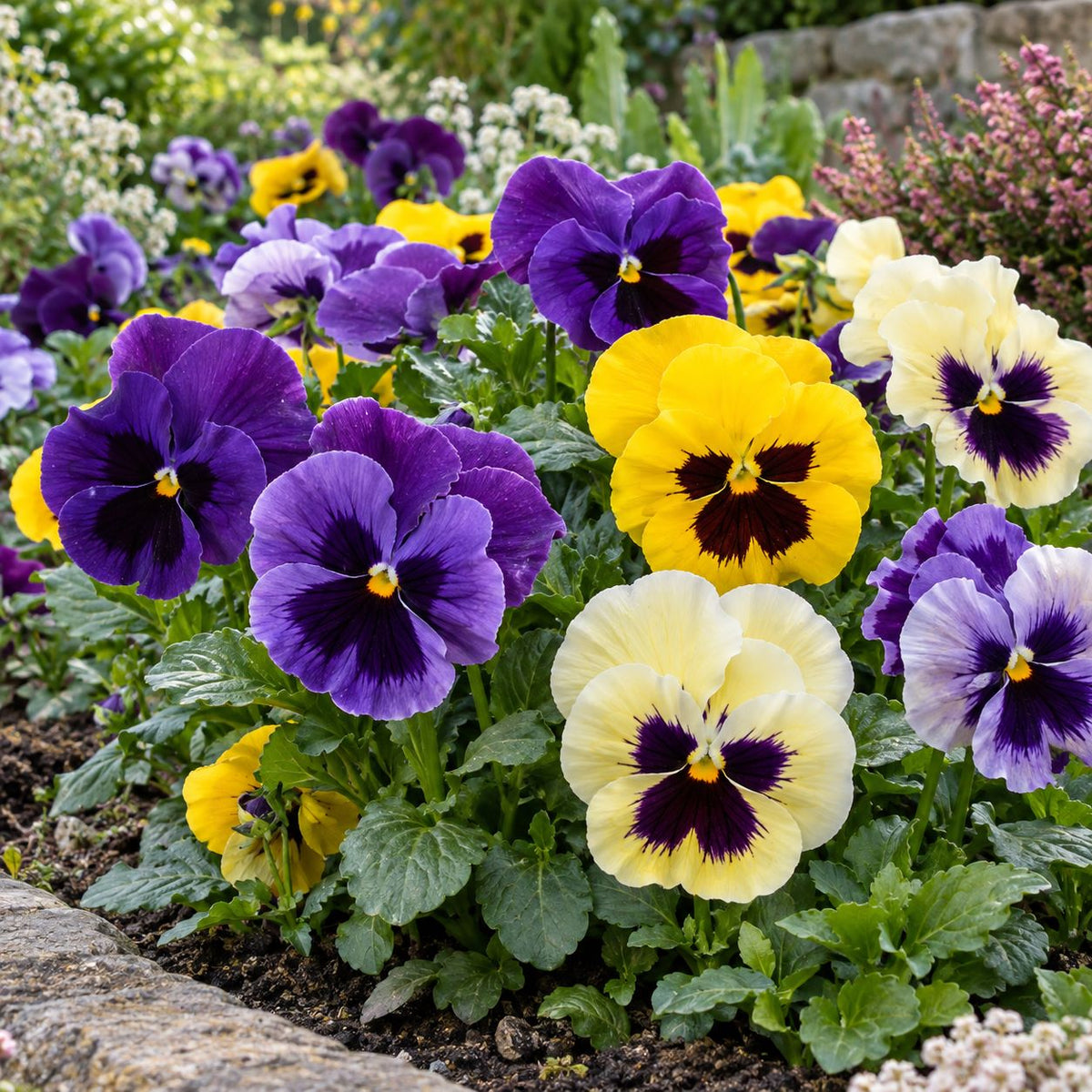
When to plant pansy seedlings and plugs
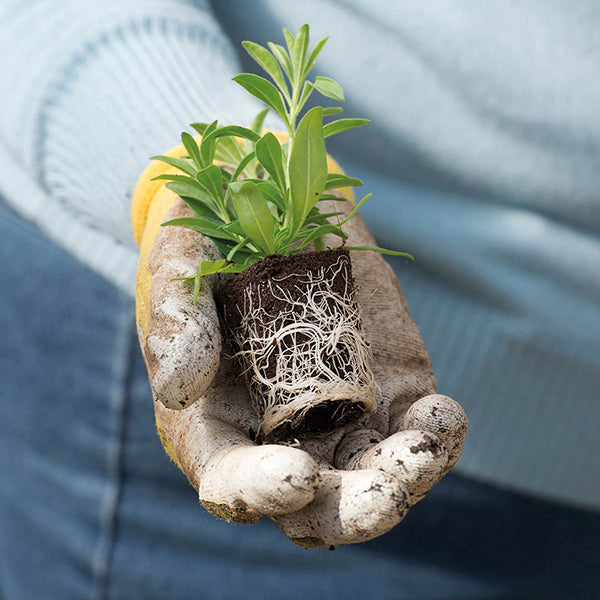
Aim for September through mid-October planting for winter and early spring displays. Getting young plants settled while the soil still holds some of its residual summer warmth lets the root systems establish themselves before hard frosts halt top growth. If you're aiming for a late-spring and summer flush, planting in early spring — from March through April — is the optimal window once freezing conditions ease.
If plug plants arrive during an unseasonably warm early-autumn spell, transfer them into 9cm pots with multi-purpose compost and grow them on in a cool, bright spot for two weeks. This stops heat check, where unexpected warm weather causes young stems to stretch and flower prematurely on weak root systems.
Discover more seasonal timing advice in our guide on the best bedding plants for spring.
How to plant pansies for vibrant borders and containers
Start with thorough soil preparation by digging in well-rotted compost or leaf mould to improve drainage while keeping the root zone moist. If you’re working with heavy clay soil, this needs horticultural grit incorporated to prevent waterlogging around tender crowns over wet winter months:
- Spacing — Set standard bedding varieties 15cm to 20cm apart in beds or borders to form a dense floral carpet. If you’re growing in containers, tighten spacing to 10cm to 12cm for an immediate, full look.
- Depth — Plant root balls level with the surrounding soil surface. Burying stems too deep invites stem rot, while planting too shallow exposes fine surface feeder roots to wind.
- Firming and settling — Press soil gently around each root ball with your fingers, rather than stomping with your boot, then water in gently.
- Pest defence — Slugs find young foliage irresistible on damp autumn evenings. Set beer traps or apply slug control early around bed perimeters. See our guide on how to get rid of slugs for more advice.
Why choose winter pansy plants for cold-season colour?
Hardy varieties have a unique, natural mechanism that helps them endure harsh UK winters. During severe frosts or snowfall, plant cells temporarily lose turgidity, causing the foliage and flowers to droop flat against the ground to prevent freezing cell rupture. As soon as the sun breaks through and temperatures rise above freezing, the stems pull moisture back up and stand upright again.
While they might stop active flower production during deep mid-winter freezes in January, healthy winter pansy plants keep their foliage and burst into bloom with the first warm spell in February. For tips on shielding outdoor displays, see our guide on how to protect your plants in winter.
Growing Cool Wave pansy plants in hanging baskets and window boxes
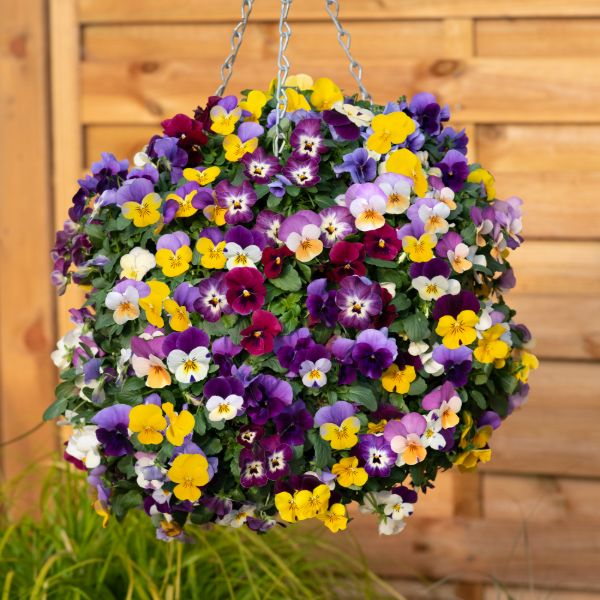
Trailing types need plenty of room to spread and spill. Their branching habit spreads up to 60cm across, making three to four plants plenty for a standard 30cm (12-inch) hanging basket or wire manger.
Always use a peat-free compost mixed with slow-release fertiliser granules to fuel constant bud production and check soil moisture weekly throughout autumn and winter; hanging baskets catch winter winds and can dry out unexpectedly even in rainy weather.
Deadheading is key to extending the season into June. Cut spent flower stalks off down at the base of the plant stem using secateurs, rather than pulling the wilted petals. This stops seed pod formation and redirects energy into fresh flowers.