Are dianthus plants perennials?
Most traditional garden pinks and cottage carnations are fully hardy evergreen perennials that thrive for several seasons. However, this isn’t automatically the case for every dianthus:
- Hardy perennials — Classic garden pinks (Dianthus plumarius) withstand severe British sub-zero winters. While they remain productive for years, mature crowns often turn woody and sparse after three to four seasons.
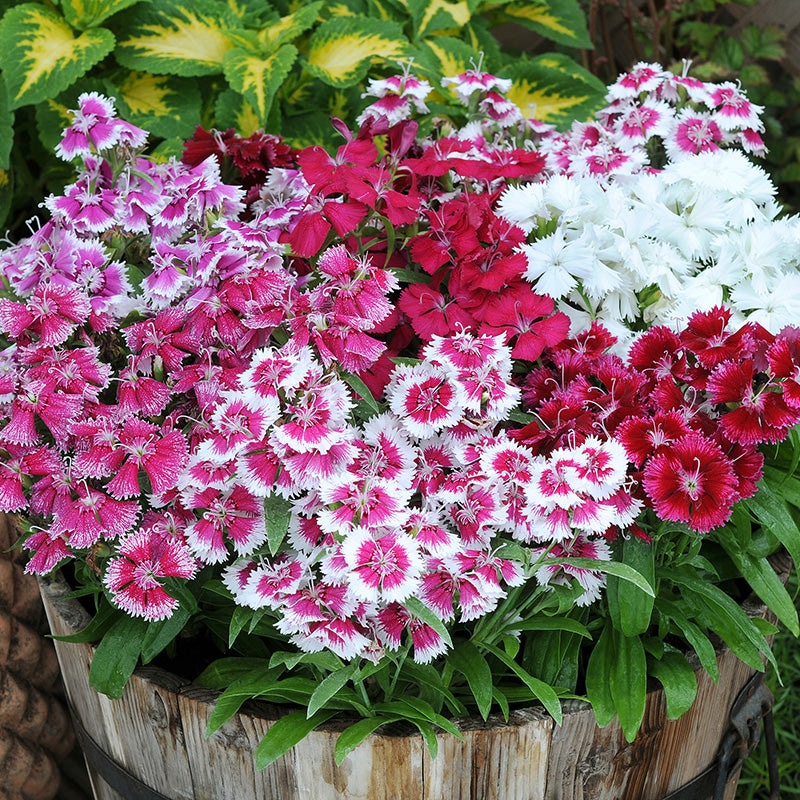
- Annuals and biennials — Varieties like Sweet William (Dianthus barbatus) or modern F1 hybrids like 'Festival Mixed' are commonly cultivated as annuals or biennials. They produce a surge of colour in their first year before needing to be replaced.
Remember: Good drainage is essential. While the foliage tolerates deep frosts, damp winter soils will cause crown rot regardless of a cultivar’s perennial status.
How to look after dianthus plants
While they’re fairly fuss-free, dianthus plants need the right care and attention to help them thrive. Here’s a quick guide:
Location:
Place plants in full sun with good drainage for non-stop summer blooms. Choose an open site that receives at least five to six hours of direct sunlight every day, as shaded conditions encourage leggy stems and poor flowering.
Soil conditions:
Alkaline to neutral soils suit these plants best. If you're gardening on heavy ground or acidic clay, work in horticultural grit and garden compost during your soil preparation to improve aeration and prevent waterlogging around the crown.
Watering:
Direct irrigation straight to the soil is much better than watering overhead. Keeping foliage dry minimises the risk of fungal issues like rust disease. Once established, outdoor plants only need soaking during prolonged dry spells.
Feeding:
Feed plants every fortnight with a liquid fertiliser throughout late spring and summer to maintain bud development. See our feeding and watering guide for tips.
Deadheading:
Snip off wilted flowers just above a leaf node using sharp garden snips. Regular deadheading encourages plants to channel energy into secondary blooms until late-autumn.
Can you divide dianthus plants?
Mature dianthus develop a woody central stem that rarely survives being split in two. Attempting to halve an established root mass will rupture essential taproots, causing the plant to die back.
The most reliable way to propagate your dianthus is by taking softwood cuttings or ‘slips’ during midsummer. Here’s how to do it:
- Select non-flowering side shoots around 7cm to 10cm in length from the base of the plant.
- Strip off the lower foliage to leave a clean stem, then make a clean cut just beneath a node.
- Place shoots in cell trays filled with a gritty seed-and-cutting compost.
- Keep cuttings in a bright, sheltered spot out of direct sunlight. Roots typically form within three to four weeks.
What to do with dianthus plug plants when they arrive
Getting young stock settled early guarantees strong roots and protects the plant from collar rot. When plug shipments arrive, unpack them immediately and give them a light drink of water. If you receive them early in spring while nighttime frosts are frequent, transfer into 9cm pots with free-draining compost and grow in an unheated greenhouse or cold frame before hardening off.
If hard winter weather threatens container-grown stock, see our guide on how to protect your plants in winter.
Planting dianthus plugs in borders and beds
When planting, space 15cm to 20cm apart to allow air movement between root balls. For hanging baskets, troughs, and patio planters, you can tighten spacing to 10cm to 12cm for an instant, full display. Always keep the crown flush with the soil line — burying foliage traps moisture and causes stem rot.
Looking for a great companion? See our guide on the best bedding plants for spring.