Do viola plants come back every year?
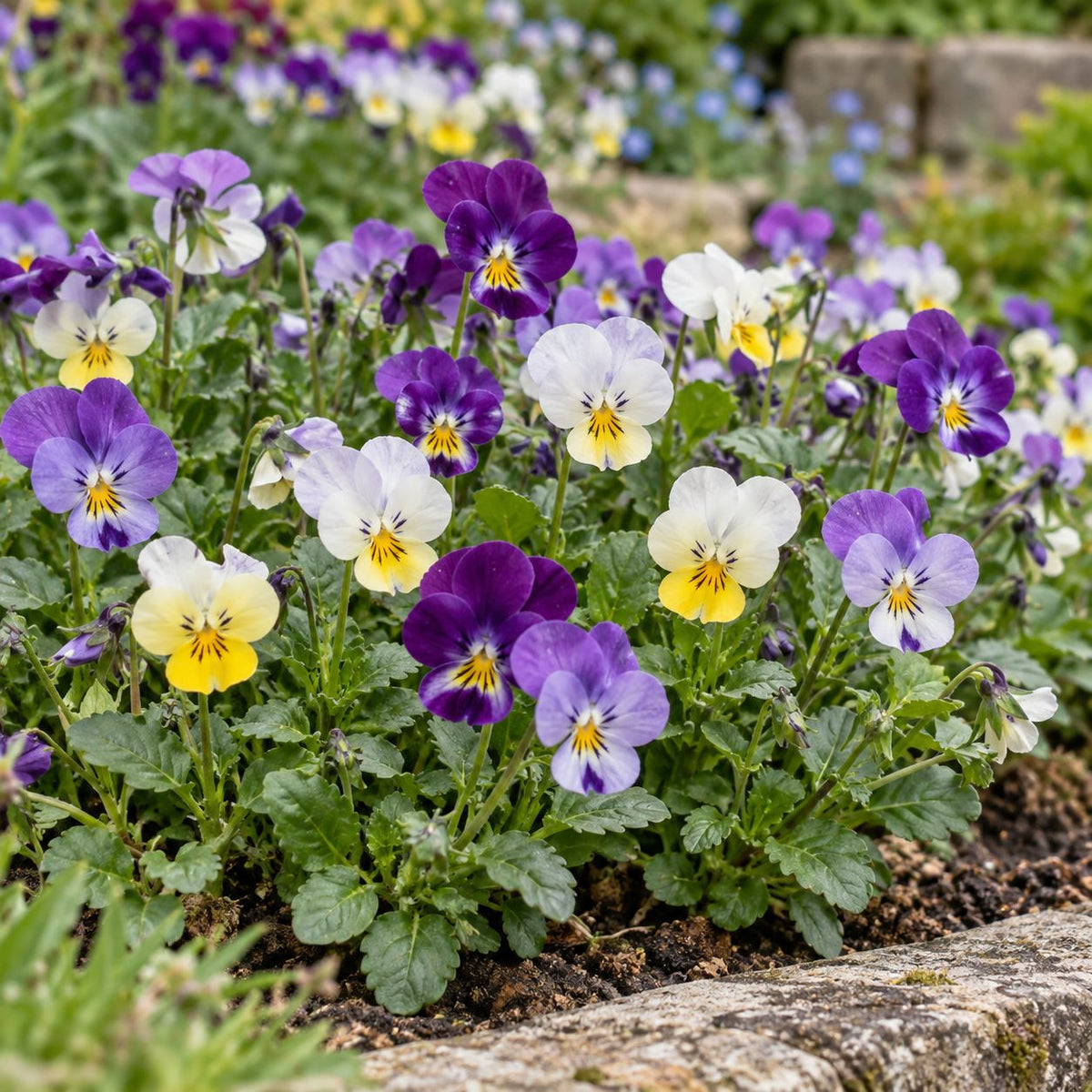
Technically speaking, these resilient flowers are short-lived perennials, although modern bedding hybrids can usually be treated like hardy biennials or cool-season annuals. Smaller F1 cultivars channel energy into non-stop flowering from October through to May. Once the summer heat arrives in June, stems naturally stretch, turn woody, and run to seed.
While individual crowns decline after a full season of heavy blooming, open-pollinated varieties often self-seed freely into nearby soil, stone crevices, and gravel margins, providing fresh blooms year after year.
If you’re looking for reliable displays across raised beds or pots, replacing spent stock with fresh autumn plugs gives you the best winter performance. Remember that, while foliage withstands sub-zero frosts, persistent winter wet causes crown rot; so good drainage is essential.
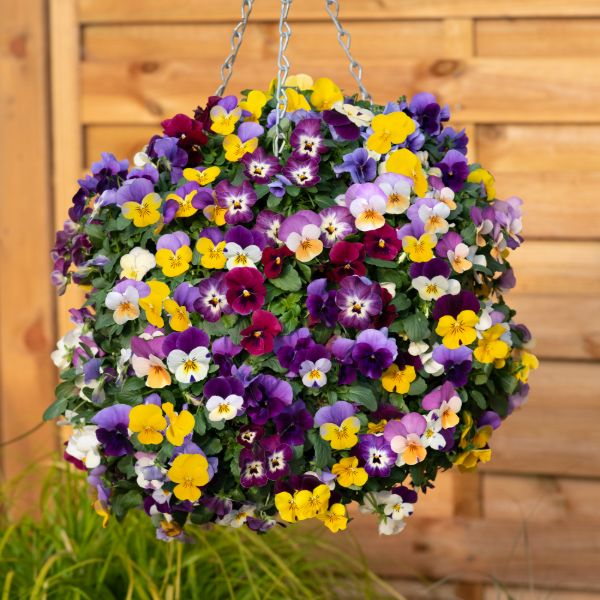
Trailing viola plants for hanging baskets and window boxes
Cascading varieties like 'Viola Teardrops Mix' produce a dense, spreading habit that spills 20cm to 30cm over basket rims, wire mangers, and balcony troughs. Their smaller flower faces withstand autumn gales and rain far better than large-flowered pansies, which tend to flop and tear in rough weather.
When planting up a standard 30cm (12-inch) hanging basket:
- Use four to five young plugs spaced evenly around the perimeter, with one central plant to build upward height.
- Plant into a quality, peat-free compost with slow-release fertiliser granules to support uninterrupted bud production.
- Check moisture levels weekly; wind tunnels dry out hanging baskets quickly, even during frosty winter weather.
- Protect newly-planted autumn containers against severe sub-zero freezes by keeping them in a sheltered spot.
How to plant viola plugs in borders and beds
Settling young plants into fertile, free-draining ground gives roots the best chance to establish before winter frosts arrive. Aim to plant between September and mid-October so roots benefit from late-summer soil warmth.
If you receive your delivery in early spring, plant out as soon as the ground thaws from late February through March.
Here’s a step-by-step planting routine:
- Unpack quickly — Check moisture on arrival and give thirsty root balls a light drink of water. If beds are frozen, transfer plugs into 9cm pots and keep them in a cold frame to grow on.
- Improve bed drainage — Carry out thorough soil preparation by incorporating well-rotted manure, leaf mould, or horticultural grit into heavy soils to stop waterlogging.
- Set the spacing — Space upright bedding cultivars like 'Viola Sorbet Mixed F1' 15cm to 20cm apart for dense ground cover. If you’re planting in decorative patio bowls, tighten spacing to 10cm to 12cm.
- Firm and level — Keep the root ball flush with the surrounding soil level. Never bury stems deeper than they sat in their plug cells, as buried foliage quickly succumbs to stem rot.
- Deter early pests — Autumn slugs target young leaves overnight; use barriers or slug control around border edges to protect fresh growth.
Pruning, deadheading, and feeding for longer displays
Trimming faded flower stalks right back to the crown with sharp snips prevents seed pod development and encourages constant bud production. Focusing solely on petals leaves the green seed capsule behind, prompting the plant to stop flowering.
Give outdoor beds and pots a drench with a balanced liquid fertiliser every three weeks during active spring flushes (see our feeding and watering guide for tips). When temperatures drop in January and growth temporarily slows, ease off feeding until the days get longer in February.