When to plant out broad bean plants
When to plant broad beans depends on the chosen cultivar:
- Autumn-sown plugs — These can go into the ground from late October-November, as long as the weather’s mild and the ground isn’t frozen.
- Early-spring plugs — These settle best between late February-April once the ground starts to thaw. Getting your broad beans established while the soil is slightly warm lets the roots anchor deeply before winter dormancy.
If conditions turn severe with waterlogged soil or sub-zero winds, protect young plants in winter by covering them with horticultural fleece or cloches. For spring-delivered plugs, harden them off in a cold frame for 7 to 10 days to acclimatise before planting directly outdoors.
Spacing for broad bean plants in beds and rows
Giving young plugs enough room stops stagnant air lingering around dense foliage, which is essential for avoiding fungal issues like chocolate spot.
Here are some tips to set them up for success:
- Traditional double rows — Space paired rows 20-25cm apart, staggering plants 20-25cm apart along the row. Leave a wider pathway of 60-75cm between each set of rows for easy weeding and harvesting.
- Single rows — If you’re opting for a single row, set plants 20cm apart with 45-60cm between adjoining lines.
- Raised beds and square foot grids — Allow 20cm between crowns in all directions to form a supportive, mutually-bracing block of foliage.
- Compact dwarf types — For dwarf selections like 'Broad Bean The Sutton' grown in patio containers, you can tighten spacing to 15cm without compromising airflow or root spread.
How tall do broad bean plants grow and how to support them
Heights differ dramatically between traditional longpods or dwarf cultivars. Dwarf varieties tap out at 30cm to 45cm tall. Their squat, bushy structure means they require virtually no staking, ideal for blustery allotment sites where taller varieties might topple over.
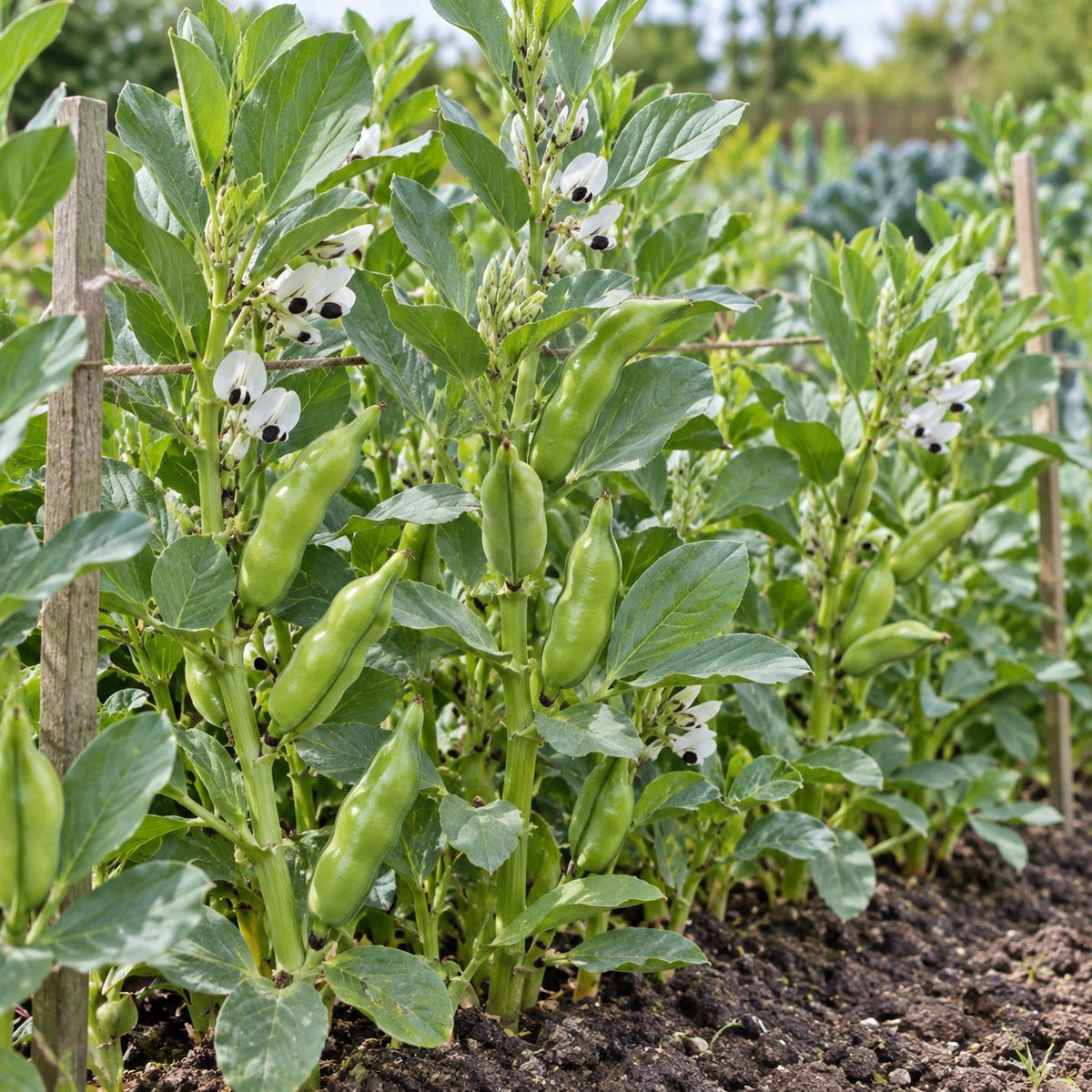
Longpod varieties like 'Broad Bean Superaguadulce' routinely reach 1m to 1.2m (and occasionally up to 1.5m in rich soils). Because heavy clusters of ripening pods make mature stems top-heavy, effective support is crucial.
Here’s how to set up your supports:
- Drive wooden stakes into the soil at the four corners of your double row (and at 1.5m intervals along long trenches).
- Run two or three tiers of taut garden twine around the perimeter at 30cm, 60cm, and 90cm levels.
This groups the entire row together, letting individual stems support each other without needing separate canes.
Planting broad bean plants
Broad bean plants are a favourite for newcomers and veteran growers alike. Here are some top tips to give your plants the care they need at every stage:
Care stage: Ground preparation
- Tip: Carry out thorough soil preparation before planting by digging in compost or well-rotted manure. Getting root balls settled into fertile ground sets up a reliable framework well before flower trusses open.
Care stage: Transplanting
- Tip: When transplanting, keep the nursery compost flush with the garden soil line and firm gently around each stem.
Care stage: Pinching out
- Tip: Once 4-5 trusses of flowers have formed pods, pinch out the top 5-8cm of leafy growing tips with your fingers. This removes young shoots favoured by pests like blackfly and redirects energy into filling out beans.
Care stage: General care
Care stage: Harvesting
- Tip: Pick lower pods first when beans are young and tender — before the internal scar turns dark — for the sweetest flavour and finest texture on the plate.
Care stage: Rotating crops
- Tip: Practice three- to four-year crop rotation to stop soil-borne pests building up.